

Using Tradelines for Housing Approval | Last Updated: August 2026 | Author: Authorized Users Tradeline Team | Reading Time: 8 min
Using tradelines for housing approval means raising your credit score fast enough to clear the minimum threshold most landlords and property managers set before they will even review your application. One quality authorized user tradeline added 45 days before you apply can move your score 20 to 60 points — often the entire gap between a rejection and a signed lease.
What You Will Learn in This Guide
- How using tradelines for housing approval actually works
- What credit score different landlords actually require
- How to time a tradeline correctly before your application
- Use our free housing approval estimator to check your odds
- What to do if you have collections, late payments, or an eviction
- Frequently asked questions about tradelines and rental approval
Using Tradelines for Housing Approval — The Core Idea
Here is something most people do not realize until after their first rejection. Landlords do not read your full credit report the way a mortgage lender does. Most of them run a quick automated check and the first thing that comes back is your score. If you are below their minimum, the application goes in the no pile before anyone reads another word.
That is exactly why authorized user tradelines work so well in this situation. They are the fastest legitimate tool available for moving your score before a specific deadline. A quality tradeline posts within 30 to 45 days. Your score reflects the change within a day or two of posting. If you plan 45 to 60 days ahead, you can cross almost any landlord’s threshold before your application goes in.
The key is understanding what threshold you are trying to cross — because it varies significantly depending on who owns the property.
What Score Does a Landlord Actually Require?
The number changes more than most people expect. Here is what the data shows across different rental situations:
| Rental Type | Typical Minimum Score | What Else They Check | Your Odds Below Minimum |
|---|---|---|---|
| Private landlord (individual owner) | 580 to 620 | Rental history, income verification | Sometimes negotiable with strong income |
| Small property management company | 620 to 640 | Background check, eviction history | Usually auto-rejected |
| Large apartment complex | 640 to 680 | Full credit report, debt-to-income | Almost always auto-rejected |
| Luxury building | 700+ | Employment verification, references | Auto-rejected below threshold |
The practical takeaway is simple. Below 620 and you are getting rejected at most places. Between 620 and 650 you can get approved at many properties but not all. Above 650 your options open significantly. The gap between where you are and where you need to be determines exactly how many tradelines you need and how urgently you need to act.
Use Our Housing Approval Estimator
Select your current credit situation and your target rental below. We will show you your current approval odds and what using tradelines for housing approval could change about your application.
var hapsc=’none’,haptype=’private’;
function haps(s){hapsc=s;[‘none’,’low’,’fair’,’mid’].forEach(function(x){var e=document.getElementById(‘hap-s-‘+x);if(x===s){e.style.border=’2px solid #1a6b3c’;e.style.background=’#edfaf0′;e.style.color=’#0f3d22′;e.style.fontWeight=’600′;e.innerHTML=’● ‘+e.innerHTML.replace(/^[^ ]+ /,”);}else{e.style.border=’1.5px solid #d8e8dc’;e.style.background=’#f8faf9′;e.style.color=’#555′;e.style.fontWeight=’400′;e.innerHTML=’○ ‘+e.innerHTML.replace(/^[^ ]+ /,”);}});}
function hapt(t){haptype=t;[‘private’,’managed’,’large’,’luxury’].forEach(function(x){var e=document.getElementById(‘hap-t-‘+x);if(x===t){e.style.border=’2px solid #1a6b3c’;e.style.background=’#edfaf0′;e.style.color=’#0f3d22′;e.style.fontWeight=’600′;e.innerHTML=’● ‘+e.innerHTML.replace(/^[^ ]+ /,”);}else{e.style.border=’1.5px solid #d8e8dc’;e.style.background=’#f8faf9′;e.style.color=’#555′;e.style.fontWeight=’400′;e.innerHTML=’○ ‘+e.innerHTML.replace(/^[^ ]+ /,”);}});}
function hapcalc(){
var data={
none:{
private:{odds:’Low — 20 to 35%’,bg:’linear-gradient(135deg,#c0392b,#e74c3c)’,icon:’⚠️’,sub:’No score makes approval difficult even with flexible private landlords’,score:’2 to 3 quality tradelines can generate a 580 to 650 score from zero within 45 days’,after:’Odds jump to 65 to 78% at private landlords with a score in the 620 to 650 range’,timing:’Add tradelines 50 to 60 days before your target application date’,next:’Start with 2 to 3 quality tradelines now. Thin files respond dramatically — you can go from no score to 620 plus in one billing cycle. Target your application 50 days after adding the tradelines to give all three bureaus time to sync.’},
managed:{odds:’Very Low — 10 to 20%’,bg:’linear-gradient(135deg,#c0392b,#e74c3c)’,icon:’⛔’,sub:’Property management companies almost always require a minimum score — no score means auto-rejection’,score:’3 quality tradelines can generate a 600 to 660 score from zero within 45 days’,after:’Odds improve to 55 to 68% once you have a score above 630′,timing:’Add tradelines 55 to 65 days before your application to allow full bureau sync’,next:’With no score, property management companies are your toughest audience. Add 3 quality tradelines and wait 55 days for all three bureaus to sync. Consider private landlords as your primary target while your score builds.’},
large:{odds:’Very Low — 5 to 15%’,bg:’linear-gradient(135deg,#7f0000,#c0392b)’,icon:’⛔’,sub:’Large complexes use automated screening — no score triggers auto-rejection before anyone reads your application’,score:’3 quality tradelines can build a 620 to 680 score from zero in 45 days’,after:’Odds improve to 48 to 62% once score crosses 650′,timing:’Add tradelines 60 to 70 days before your application for maximum bureau coverage’,next:’Large complexes will reject you automatically without a score. Build with 3 tradelines first. Private landlords who review applications manually are a far better immediate target while your score develops.’},
luxury:{odds:’Extremely Low — under 5%’,bg:’linear-gradient(135deg,#7f0000,#c0392b)’,icon:’⛔’,sub:’Luxury buildings require 700 plus and will auto-reject with no score’,score:’Premium tradelines can generate a strong initial score but 700 plus from zero takes sustained effort’,after:’Realistic luxury odds with a 680 score: 25 to 35% — luxury requires more than credit alone’,timing:’Plan a 90 day minimum timeline for luxury applications from a no-score starting point’,next:’Luxury is not the right immediate target. Start with private landlords using 3 to 4 premium tradelines. Revisit luxury in 90 days when your profile has had time to build real depth.’}},
low:{
private:{odds:’Low — 25 to 40%’,bg:’linear-gradient(135deg,#d35400,#e67e22)’,icon:’⚠️’,sub:’Below 580 puts you outside most minimums but some private owners will still review your full application’,score:’2 quality tradelines typically add 40 to 80 points from a below-580 starting score’,after:’Odds jump to 68 to 82% if you can reach 625 to 645′,timing:’Add tradelines 45 to 55 days before your application date’,next:’You are closer than you think. Two quality high-limit tradelines attacking your utilization and account age can push you from below 580 to above 625 in one billing cycle. Apply to several private landlords simultaneously 50 days after adding the tradelines.’},
managed:{odds:’Low — 15 to 25%’,bg:’linear-gradient(135deg,#c0392b,#e74c3c)’,icon:’⚠️’,sub:’Below 580 is below most property management minimums of 620 to 640′,score:’2 to 3 tradelines typically add 40 to 80 points from a below-580 starting score’,after:’Odds improve to 58 to 72% once you reach 635 or higher’,timing:’Add tradelines 48 to 58 days before your application’,next:’Add 2 to 3 quality tradelines targeting high limits and seasoned account age. The utilization shift from high-limit accounts alone can move your score 30 to 50 points. Give it 50 days to post and reflect before submitting.’},
large:{odds:’Very Low — 10 to 20%’,bg:’linear-gradient(135deg,#c0392b,#e74c3c)’,icon:’⛔’,sub:’Below 580 is below most large complex automated minimums of 640 to 680′,score:’3 quality tradelines can add 50 to 90 points from a damaged starting score’,after:’Odds improve to 48 to 62% once score crosses 645′,timing:’Add tradelines 52 to 62 days before your application’,next:’Large complexes will likely auto-reject below 620. Build your score with 2 to 3 tradelines first, then apply. Private landlords are a significantly better immediate option.’},
luxury:{odds:’Extremely Low — under 5%’,bg:’linear-gradient(135deg,#7f0000,#c0392b)’,icon:’⛔’,sub:’Luxury buildings are not a realistic target below 580 — focus on building your score first’,score:’Premium tradelines can add 50 to 90 points but 700 plus requires sustained improvement’,after:’Realistic luxury odds require 700 plus — that takes more than tradelines alone from this starting point’,timing:’Plan a 60 to 90 day improvement timeline before targeting luxury’,next:’Focus on private landlords and standard apartments while you build your score with 2 to 3 quality tradelines. Revisit luxury applications in 90 days with a stronger profile.’}},
fair:{
private:{odds:’Moderate — 52 to 67%’,bg:’linear-gradient(135deg,#d68910,#f0a500)’,icon:’🟡’,sub:’You are in range for some private landlords — a small targeted boost locks it in’,score:’1 to 2 tradelines typically add 20 to 50 points from a 580 to 619 starting score’,after:’Odds jump to 82 to 91% once you reach 632 to 650′,timing:’Add tradelines 38 to 48 days before your application — you are very close’,next:’You are one tradeline away from clearing most private landlord minimums. One quality high-limit account added 42 days before your application should push you from 590 to 635 in a single billing cycle.’},
managed:{odds:’Low to Moderate — 30 to 45%’,bg:’linear-gradient(135deg,#d35400,#e67e22)’,icon:’⚠️’,sub:’580 to 619 is below most property management minimums of 620 to 640′,score:’1 to 2 tradelines typically add 20 to 50 points from this range’,after:’Odds improve to 67 to 80% once you reach 638 or higher’,timing:’Add tradelines 42 to 52 days before your application’,next:’One or two quality high-limit tradelines should cross the property management threshold for you. A $15,000 limit account can significantly restructure your utilization ratio and push your score past 630 quickly.’},
large:{odds:’Low — 20 to 35%’,bg:’linear-gradient(135deg,#c0392b,#e74c3c)’,icon:’⚠️’,sub:’Large complexes want 640 to 680 — you need a meaningful push from 580 to 619′,score:’2 quality tradelines typically add 30 to 60 points from this starting range’,after:’Odds improve to 57 to 72% once you reach 652′,timing:’Add tradelines 47 to 57 days before your application’,next:’You need a 30 to 50 point improvement to compete at large complexes. Two quality tradelines should get you there in 45 days. Paying down any high balances simultaneously gives you a combined attack on utilization from both sides.’},
luxury:{odds:’Very Low — 10 to 20%’,bg:’linear-gradient(135deg,#c0392b,#e74c3c)’,icon:’⛔’,sub:’Luxury wants 700 plus — you need sustained improvement from 580 to 619′,score:’Multiple premium tradelines can add 40 to 80 points from this range’,after:’Luxury odds improve significantly once you reach 682 plus’,timing:’Plan 60 to 90 days of improvement before targeting luxury applications’,next:’Add 2 to 3 premium tradelines and give them 60 days to fully impact your score. Consider standard apartments now and revisit luxury in 90 days with a significantly stronger profile.’}},
mid:{
private:{odds:’Good — 72 to 82%’,bg:’linear-gradient(135deg,#1a6b3c,#27ae60)’,icon:’✅’,sub:’You are in range for most private landlords — one tradeline could seal the deal’,score:’1 quality tradeline typically adds 15 to 35 points from a 620 to 649 starting score’,after:’Odds reach 89 to 96% once you cross 652′,timing:’Add one tradeline 38 to 45 days before your application — you are very close’,next:’You only need a small push. One premium high-limit tradeline added 42 days before your application should get you above 652 and into very strong approval territory for private landlords and most standard properties.’},
managed:{odds:’Moderate — 57 to 72%’,bg:’linear-gradient(135deg,#d68910,#f0a500)’,icon:’🟡’,sub:’620 to 649 is borderline for property management — a targeted boost makes a clear difference’,score:’1 to 2 quality tradelines typically add 15 to 40 points from this range’,after:’Odds improve to 79 to 89% once you reach 657 or higher’,timing:’Add 1 to 2 tradelines 42 to 52 days before your application’,next:’You are right on the edge of property management requirements. One targeted high-limit tradeline should push you clearly into approval territory. If you have any high-balance cards, pay those down simultaneously for a faster combined result.’},
large:{odds:’Moderate — 47 to 62%’,bg:’linear-gradient(135deg,#d68910,#f0a500)’,icon:’🟡’,sub:’620 to 649 is below most large complex minimums of 640 to 680′,score:’1 to 2 quality tradelines typically add 20 to 45 points from this range’,after:’Odds improve to 74 to 84% once you reach 668 or higher’,timing:’Add tradelines 47 to 52 days before your application’,next:’Large complexes want 640 to 680. One or two quality tradelines should get you there. Focus on account age and limit size — a 7-year-old account with a $15,000 limit will move your score further than three basic accounts.’},
luxury:{odds:’Low — 20 to 35%’,bg:’linear-gradient(135deg,#c0392b,#e74c3c)’,icon:’⚠️’,sub:’Luxury wants 700 plus — you need a meaningful push from 620 to 649′,score:’2 premium tradelines can add 25 to 50 points from this range’,after:’Odds improve significantly once you reach 682 to 700′,timing:’Add 2 premium tradelines 52 to 62 days before your luxury application’,next:’You need a 50 to 80 point improvement for strong luxury odds. Two premium accounts with 8 plus year histories and $20,000 plus limits give you the best chance. Give them 58 days to fully post across all three bureaus before applying.’}}
};
var rec=data[hapsc][haptype];
document.getElementById(‘hap-banner’).style.background=rec.bg;
document.getElementById(‘hap-icon’).textContent=rec.icon;
document.getElementById(‘hap-odds’).textContent=rec.odds;
document.getElementById(‘hap-sub’).textContent=rec.sub;
document.getElementById(‘hap-score’).textContent=rec.score;
document.getElementById(‘hap-after’).textContent=rec.after;
document.getElementById(‘hap-timing’).textContent=rec.timing;
document.getElementById(‘hap-next’).textContent=rec.next;
document.getElementById(‘hap-form’).style.display=’none’;
document.getElementById(‘hap-result’).style.display=’block’;
}
function hapreset(){document.getElementById(‘hap-form’).style.display=’block’;document.getElementById(‘hap-result’).style.display=’none’;}
Using Tradelines for Housing Approval — Timing It Right
Most people get this wrong. They find a place they want, get rejected, and then start looking for a fast fix. By then it is too late.
The right sequence is the opposite. Know when you plan to apply. Count back 50 days. That is when you need your tradelines in place. Here is why that specific window works.
After you are added to an account, the card issuer reports on its next billing cycle — typically 15 to 30 days. Then the bureaus process the update — another 5 to 10 days. Then your score recalculates. The full chain takes 30 to 45 days. Add a 10-day buffer for bureau sync variation and 50 days gives you comfortable confidence that everything is reflected before your application goes in.
One more thing worth knowing. All three bureaus update at slightly different times since Experian, Equifax, and TransUnion each process independently. Landlords typically pull one bureau — but you want all three updated before you apply in case they pull a different one than you expect.
What Landlords Check Beyond Your Score
Your score is the filter. Pass it and someone actually reads your application. Here is what they look at next and how to prepare for each one.
| What They Check | What They Want to See | How to Prepare |
|---|---|---|
| Credit score | 620 to 700 depending on property type | Tradelines raise your score in 30 to 45 days |
| Income | Typically 3x monthly rent in gross income | Pay stubs, bank statements, or offer letter |
| Rental history | Positive references from previous landlords | Contact past landlords before they are asked |
| Eviction history | Zero evictions — any prior eviction is a major obstacle | Private landlords are more flexible than property managers |
| Background check | Varies by state law on what can be used | Know your state’s rules before applying |
| Debt-to-income ratio | Total monthly debt under 40 to 45% of gross income | Paying down existing debt improves this calculation |
Tradelines address the credit score component. Everything else is on you to prepare before the application goes in. A strong income letter alongside a newly improved credit score is a much more compelling application package than a score bump alone.
What If You Have Collections or Late Payments?
This is the part most guides skip — so let’s be direct about it.
Tradelines add positive weight to your credit file. They do not remove negative items. A collection, a charge-off, or a late payment stays on your report regardless of how many tradelines you add. The negative items and the new positive tradelines coexist on the same report.
That said, tradelines still help. Many landlords look at the overall picture — not just the negatives in isolation. A report showing collections from three years ago plus three new positive tradelines with clean payment history tells a different story than the same negatives standing alone. The positive weight can shift a borderline decision — especially with private landlords who review applications individually rather than running automated rejections.
For serious derogatory history, combining tradelines with credit repair services gives you the most complete approach. Tradelines build the positive side. Repair work disputes and removes legitimate errors on the negative side. Both together move faster than either alone.
Tradelines for Housing — What Makes an Account Actually Worth Using
Not every tradeline produces the same result. The account’s specific characteristics determine how much your score moves. Here is what matters most.
Account age is the biggest differentiator. A 10-year-old account raises your average account age dramatically more than a 2-year-old one. Always ask the age of the specific account before committing.
Credit limit directly affects your utilization ratio — the second biggest factor in your score. A $500 limit account barely moves the math. A $15,000 or $20,000 limit account can restructure your utilization significantly in a single billing cycle.
Payment history on the account must be spotless. Zero late payments, ever. One 30-day late mark on a tradeline you are added to can hurt your score rather than help it. Verify this before any placement — not after.
Bureau reporting determines how widely your improvement shows up. Accounts that report to all three major bureaus give you the broadest coverage before your landlord runs their check.
Frequently Asked Questions
Using tradelines for housing approval — how far in advance do I need to start?
At least 45 to 50 days before your target application date. Most tradelines post within 30 to 45 days of being added. Adding a buffer gives you confidence everything is reflected before your credit is pulled. If you are applying in less than 30 days, a tradeline will likely not post in time — focus on other parts of your application package instead.
How many tradelines do I need to get approved for housing?
For most rental situations, one to two quality tradelines is enough. The goal is crossing the landlord’s minimum score threshold — not building a perfect credit profile from scratch. A single high-limit seasoned account can often move your score 20 to 50 points, which covers the gap for most applicants. You can verify the impact by checking your reports through AnnualCreditReport.com after the tradeline posts.
Can a landlord see that I used authorized user tradelines?
They can see that you are listed as an authorized user on an account — that designation appears in your credit history. This is not a red flag. Authorized user accounts are completely legal. The Equal Credit Opportunity Act and Regulation B require credit bureaus to include authorized user history in credit reports — the same mechanism parents use to help adult children build credit. Millions of people have authorized user accounts on their reports for this exact reason.
What if I have an eviction on my record?
Tradelines cannot help with an eviction. Eviction records appear on tenant screening reports separately from credit checks — and most property management companies will reject on that basis before your score even matters. Your best path is private landlords who review applications individually, offering a larger security deposit upfront, and being transparent about the eviction rather than hoping it goes unnoticed. A strong credit score helps you compete — but it does not erase an eviction from the screening report.
Will tradelines help me qualify for Section 8 or subsidized housing?
Income-restricted and subsidized housing programs typically have lower or different credit requirements than market-rate rentals. Many prioritize income verification over credit score. Check the specific requirements for the program you are applying to — some have no minimum score at all, while others require basic creditworthiness. Tradelines can still help if a score threshold exists, but income eligibility is usually the primary factor.
What is the minimum credit score for renting an apartment in 2026?
There is no universal minimum — it depends entirely on the property. Private landlords often accept 580 to 620. Property management companies typically want 620 to 650. Large complexes often require 650 to 680. Luxury buildings frequently want 700 or higher. The estimator above gives you a more specific picture based on your target property type.
Using Tradelines for Housing Approval — The Bottom Line
Using tradelines for housing approval works best as a planned strategy, not a last-minute fix. The clients who get the best results are the ones who identify their target property, check the score requirement, calculate the gap, and add their tradelines 50 days before they apply.
That kind of planning turns what feels like an obstacle — a score that is 30 points too low — into a solvable problem with a clear timeline. One or two quality tradelines added at the right time is often the entire difference between getting the apartment and starting the search over.
We have helped clients navigate exactly this situation more times than we can count. The ones who plan ahead consistently get better outcomes than the ones who try to fix it after a rejection letter arrives.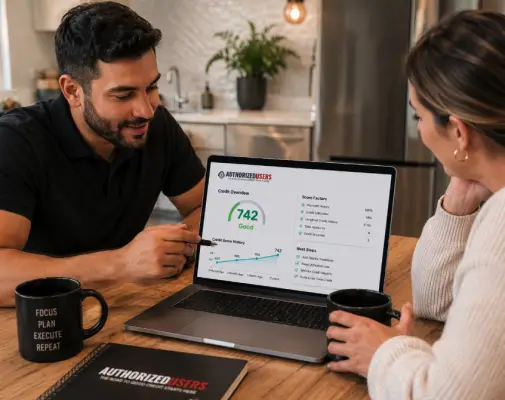
Ready to Get Approved for Your Next Home?
Our specialists review your credit profile and match you with the right tradelines for your specific score gap and application timeline — no generic packages, no guesswork.
Get a Free Tradeline Consultation — authorizedusers.com/contact-us/
No cost. No hard credit pull. No pressure — just a clear plan for getting your housing application approved.
📞 (714) 594-5043 | ✉️ Tradelines@AuthorizedUsers.com
About the Author
The Authorized Users team has specialized in authorized user tradelines and credit profile strategy since 2006. We work with clients across all 50 states, helping individuals and business owners build real, lasting credit using legal, transparent methods.
{
“@context”: “https://schema.org”,
“@graph”: [
{
“@type”: “Article”,
“headline”: “Using Tradelines for Housing Approval: What Actually Works (2026)”,
“description”: “A complete guide to using tradelines for housing approval, covering what credit score landlords require, how to time tradelines before applying, and what to do with collections or evictions.”,
“author”: {
“@type”: “Organization”,
“name”: “Authorized Users”,
“url”: “https://authorizedusers.com”
},
“publisher”: {
“@type”: “Organization”,
“name”: “Authorized Users”,
“logo”: {
“@type”: “ImageObject”,
“url”: “https://authorizedusers.com/wp-content/uploads/2025/08/auth-logo.webp”
}
},
“datePublished”: “2026-08-12T10:00:00-07:00”,
“dateModified”: “2026-08-12T10:00:00-07:00”,
“mainEntityOfPage”: {
“@type”: “WebPage”,
“@id”: “https://authorizedusers.com/using-tradelines-for-housing-approval/”
}
},
{
“@type”: “FAQPage”,
“mainEntity”: [
{
“@type”: “Question”,
“name”: “Using tradelines for housing approval — how far in advance do I need to start?”,
“acceptedAnswer”: {
“@type”: “Answer”,
“text”: “At least 45 to 50 days before your target application date. Most tradelines post within 30 to 45 days of being added. Adding a buffer gives you confidence everything is reflected before your credit is pulled.”
}
},
{
“@type”: “Question”,
“name”: “How many tradelines do I need to get approved for housing?”,
“acceptedAnswer”: {
“@type”: “Answer”,
“text”: “For most rental situations, one to two quality tradelines is enough. A single high-limit seasoned account can often move your score 20 to 50 points, which covers the gap for most applicants.”
}
},
{
“@type”: “Question”,
“name”: “Can a landlord see that I used authorized user tradelines?”,
“acceptedAnswer”: {
“@type”: “Answer”,
“text”: “They can see that you are listed as an authorized user on an account. This is not a red flag — authorized user accounts are completely legal and the Equal Credit Opportunity Act requires credit bureaus to include authorized user history in credit reports.”
}
},
{
“@type”: “Question”,
“name”: “What if I have an eviction on my record?”,
“acceptedAnswer”: {
“@type”: “Answer”,
“text”: “Tradelines cannot help with an eviction. Eviction records appear on tenant screening reports separately from credit checks. Your best path is private landlords who review applications individually, offering a larger security deposit, and being transparent about the eviction.”
}
},
{
“@type”: “Question”,
“name”: “What is the minimum credit score for renting an apartment in 2026?”,
“acceptedAnswer”: {
“@type”: “Answer”,
“text”: “There is no universal minimum. Private landlords often accept 580 to 620. Property management companies typically want 620 to 650. Large complexes often require 650 to 680. Luxury buildings frequently want 700 or higher.”
}
},
{
“@type”: “Question”,
“name”: “Will tradelines help me qualify for Section 8 or subsidized housing?”,
“acceptedAnswer”: {
“@type”: “Answer”,
“text”: “Income-restricted and subsidized housing programs typically have lower or different credit requirements than market-rate rentals. Many prioritize income verification over credit score. Tradelines can help if a score threshold exists, but income eligibility is usually the primary factor.”
}
}
]
}
]
}