

Business Tradelines Explained | Last Updated: June 2026 | Author: Authorized Users Tradeline Team | Reading Time: 8 min
Business tradelines explained simply: they’re the credit accounts that show up on your business credit report instead of your personal one — and most business owners don’t think about them until a lender asks for documentation they don’t have. If you’ve ever been surprised by a loan denial despite having decent personal credit, there’s a good chance your business credit file was the actual problem. Let’s walk through what business tradelines actually are and why they matter more than most owners realize.
What You Will Learn in This Guide
- What business tradelines are and how they differ from personal tradelines
- The two main types of business tradelines and how each one works
- How business tradelines affect your ability to get funding
- How to start building business tradelines from scratch
- Frequently asked questions about business tradelines
Business Tradelines Explained — The Basics
Here’s the thing most people get wrong right away. A business tradeline isn’t the same as a personal tradeline, even though the word “tradeline” gets used for both. A personal tradeline lives on your personal credit report — Experian, Equifax, TransUnion. A business tradeline lives on your business credit report, which is a completely separate file tracked by different bureaus entirely.
If you’ve built personal credit through credit cards or loans, you already understand the concept — it just translates differently once your business is the one applying for credit instead of you personally.
The Two Types of Business Tradelines
Business tradelines explained properly means understanding there are actually two distinct categories, and they behave differently:
Financial tradelines. These come from banks, credit unions, and financial institutions — a business credit card, a business loan, an equipment lease, a line of credit. They show a lender exactly how your company handles borrowed money over time.
Vendor tradelines. Also called trade credit or supplier tradelines, these come from your relationships with vendors and suppliers. If you open a net-30 account with a supplier — meaning you have 30 days to pay an invoice — that account becomes a vendor tradeline once it reports. Pay early or on time consistently, and it builds your business credit just like a financial account would.
Most strong business credit profiles have a mix of both. Relying only on vendor tradelines without any financial tradelines tends to leave gaps that bigger lenders notice.
Who Tracks Business Tradelines
This part trips people up constantly. Your business credit file isn’t tracked by the same three bureaus as your personal credit. Experian actually runs both a consumer division and a completely separate business division — and your business profile there has zero overlap with your personal one. Dun & Bradstreet is business-only and focuses heavily on vendor tradelines, often grouping them by industry rather than listing every supplier individually.
Some bureaus specialize in one type over the other. That’s why a business with strong vendor relationships but no financial tradelines might look completely different depending on which bureau a lender pulls from.
How Business Tradelines Affect Your Funding Options
This is where business tradelines explained stops being theoretical and starts mattering to your bottom line. A thin or empty business credit file makes lenders nervous regardless of how strong your personal credit looks. A solid file built on real tradelines opens up:
Traditional bank loans. Banks want to see a track record before extending business credit — your tradelines are that track record.
SBA financing. SBA lenders specifically look at business credit history alongside personal credit when evaluating applications.
Equipment loans and leases. Equipment financing companies lean heavily on business credit reports to set terms and rates.
Higher-limit business credit cards. Card issuers extend bigger limits to businesses with documented, positive tradeline history.
What Lending Standards Actually Look For
This isn’t just industry chatter — it’s built into how business credit scoring actually works. Here’s a concrete example most owners don’t know about:
| Scoring Model | Score Range | What It Requires |
|---|---|---|
| D&B Paydex Score | 1 to 100 | 80+ requires consistently on-time payment across reported trade accounts |
| FICO SBSS Score | 0 to 300 | Most SBA lenders use a minimum SBSS cutoff around 140-160 for loan eligibility |
| Experian Intelliscore Plus | 1 to 100 | Higher scores require both financial and vendor tradeline diversity |
Notice that every single model rewards consistency and diversity of account types — not just having accounts, but having the right mix reporting positive history over time. 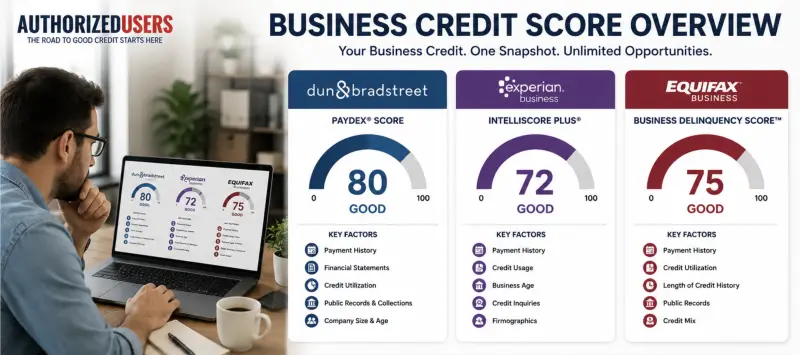
How to Start Building Business Tradelines
If you’re starting from zero, here’s the realistic path:
Start with vendor accounts. Net-30 vendor accounts are usually the easiest entry point — many suppliers extend trade credit to new businesses without requiring an established credit history first.
Add a business credit card. Once you have a vendor account or two reporting, a business credit card adds a financial tradeline to the mix and starts building toward that diversity lenders want to see.
Be patient with the timeline. Attaching new tradelines and seeing them reflected across bureau reports typically takes around 60 days from start to finish. Once it’s done, you should request a copy of your report from each bureau to confirm it actually posted.
Pair it with strong personal credit. Lenders evaluating business loans, especially SBA loans, often look at your personal credit alongside your business file — particularly for newer businesses without years of standalone history yet.
Common Mistakes Business Owners Make
We see the same handful of issues come up again and again with new business owners:
Assuming personal credit alone is enough. A great personal score doesn’t substitute for an empty business credit file. Lenders want to see the business itself has a track record.
Only building vendor tradelines. Vendor accounts are a great start, but a file with zero financial tradelines often looks incomplete to lenders evaluating larger loan amounts.
Not checking which bureau a lender actually pulls from. Since bureaus specialize differently, a file that looks strong on one bureau’s report might look thin on another’s. Know which bureau matters for the financing you’re pursuing.
Giving up too early. Sixty days feels like a long wait when you need funding now, but rushing the process or skipping verification steps tends to cost more time in the long run, not less.
Frequently Asked Questions
Business tradelines explained simply — what’s the one-sentence version?
They’re the credit accounts on your business’s credit report — separate from your personal credit — that show lenders how your company handles borrowed money and trade credit over time.
Do personal tradelines help my business at all?
Indirectly, yes. Lenders evaluating business loans, especially newer businesses, frequently look at your personal credit alongside your business file. A strong personal profile built through authorized user tradelines can support a business loan application, but it doesn’t replace an actual business credit history.
How long does it take to build a usable business credit file?
Most owners see initial tradelines posting within about 60 days. Building a file robust enough for larger financing — SBA loans, equipment leases — typically takes 12 months or more of consistent, positive reporting across multiple account types.
What’s the difference between a financial tradeline and a vendor tradeline?
Financial tradelines come from banks and lenders — credit cards, loans, leases. Vendor tradelines come from suppliers extending trade credit, like a net-30 account. Both report to business credit bureaus, but they’re tracked and weighted somewhat differently depending on the bureau.
Can I check if my business tradelines posted correctly?
Yes — request a copy of your business credit report directly from the relevant bureau, similar to how you’d check a personal report through AnnualCreditReport.com on the personal side. Confirm the account is reflected, reporting accurately, and showing positive payment history.
Do all bureaus track the same business tradelines?
No. Some bureaus focus more on financial tradelines, others on vendor tradelines, and your file can look different depending on which one a lender checks. This is exactly why building both types matters rather than relying on just one.
The Bottom Line on Business Tradelines

Business tradelines explained the long way comes down to one simple idea — your business needs its own credit story, separate from yours personally. Lenders, vendors, and partners are going to look at that story before they extend you money or terms, and a thin or nonexistent file makes everything harder than it needs to be.
Building a mix of financial and vendor tradelines, being patient with the timeline, and pairing it with a solid personal credit foundation gives your business the strongest possible position when it’s time to apply for real funding.
Ready to Build Your Business Credit Foundation?
Our specialists can walk you through exactly where your business credit file stands today and what it actually needs to qualify for the financing you’re after.
Get a Free Tradeline Consultation — authorizedusers.com/contact-us/
No cost. No hard credit pull. Just a clear, honest assessment of where you stand.
📞 (714) 594-5043 | ✉️ Tradelines@AuthorizedUsers.com
About the Author
The Authorized Users team has specialized in tradeline strategy and credit profile building since 2006. We work with individuals and business owners across all 50 states, helping them build real, lasting credit — personal and business — using legal, transparent methods.